Disabled Bus Pass: Who Qualifies and How to Apply
You do not have to wait until pension age for free bus travel. If you have a disability, you may qualify for a disabled bus pass at any age. It works in the same way as the older person’s pass, and in some areas it comes with extra benefits such as a companion pass.
Bus Pass Britain earns a small commission if you buy through the Amazon links on this page, at no extra cost to you. As an Amazon Associate we earn from qualifying purchases. Prices change, so check each one before you buy.

Here is who qualifies for a disabled bus pass, how to apply, and how the rules differ across the UK.
Who qualifies for a disabled bus pass in England?
In England, the law sets out who is eligible. You can usually get a disabled bus pass if you:
- are blind or partially sighted
- are profoundly or severely deaf
- are without speech
- have a disability or injury that seriously affects your ability to walk
- do not have arms, or have long term loss of use of both arms
- have a learning disability
- would be refused a driving licence on medical grounds, other than for drink or drug misuse
Your council decides whether you meet these rules. It may ask for evidence, such as a letter from your GP, proof of a benefit such as the higher rate mobility part of a disability benefit, or a sight loss registration.
Also worth a look
- Taking the train as well? See whether a Senior Railcard would pay for itself.
- Finding day to day tasks harder? Check whether you can get Attendance Allowance.
How to apply for a disabled bus pass
In England, you apply to your local council, usually online. You will need a passport style photo, proof of address and evidence of your disability. You can find your council’s application page on GOV.UK by entering your postcode.
Most councils issue the pass within a few weeks. In addition, it usually needs renewing every few years, so keep a note of the expiry date.
When can you use a disabled bus pass?
In England, the national rules are the same as for the older person’s pass. You travel free from 9:30am to 11pm on weekdays and all day at weekends and on bank holidays. However, many councils let disabled pass holders travel earlier, so check your local rules. Our guide to using your bus pass before 9:30 explains more.
Companion passes
If you cannot travel on your own, some councils in England issue a companion pass. This lets someone travel with you for free. Companion passes are not part of the national scheme, so availability depends on where you live.

Disabled bus pass in Scotland, Wales and Northern Ireland
In Scotland, disabled people can get a National Entitlement Card that gives free bus travel, and some also qualify for a companion entitlement. Wales works differently, because Transport for Wales issues disabled person’s travel cards, with companion cards available too. Northern Ireland has its own scheme, where people with certain disabilities can get a Half Fare SmartPass or, in some cases, free travel.
See our guides to the bus pass in Scotland, Wales and Northern Ireland for the full details.
Other help if you have a disability
Your disabled bus pass is only one part of the support available. For example, a Disabled Persons Railcard takes a third off most train fares. If you are over State Pension age and need help with personal care, you may also be able to claim Attendance Allowance.
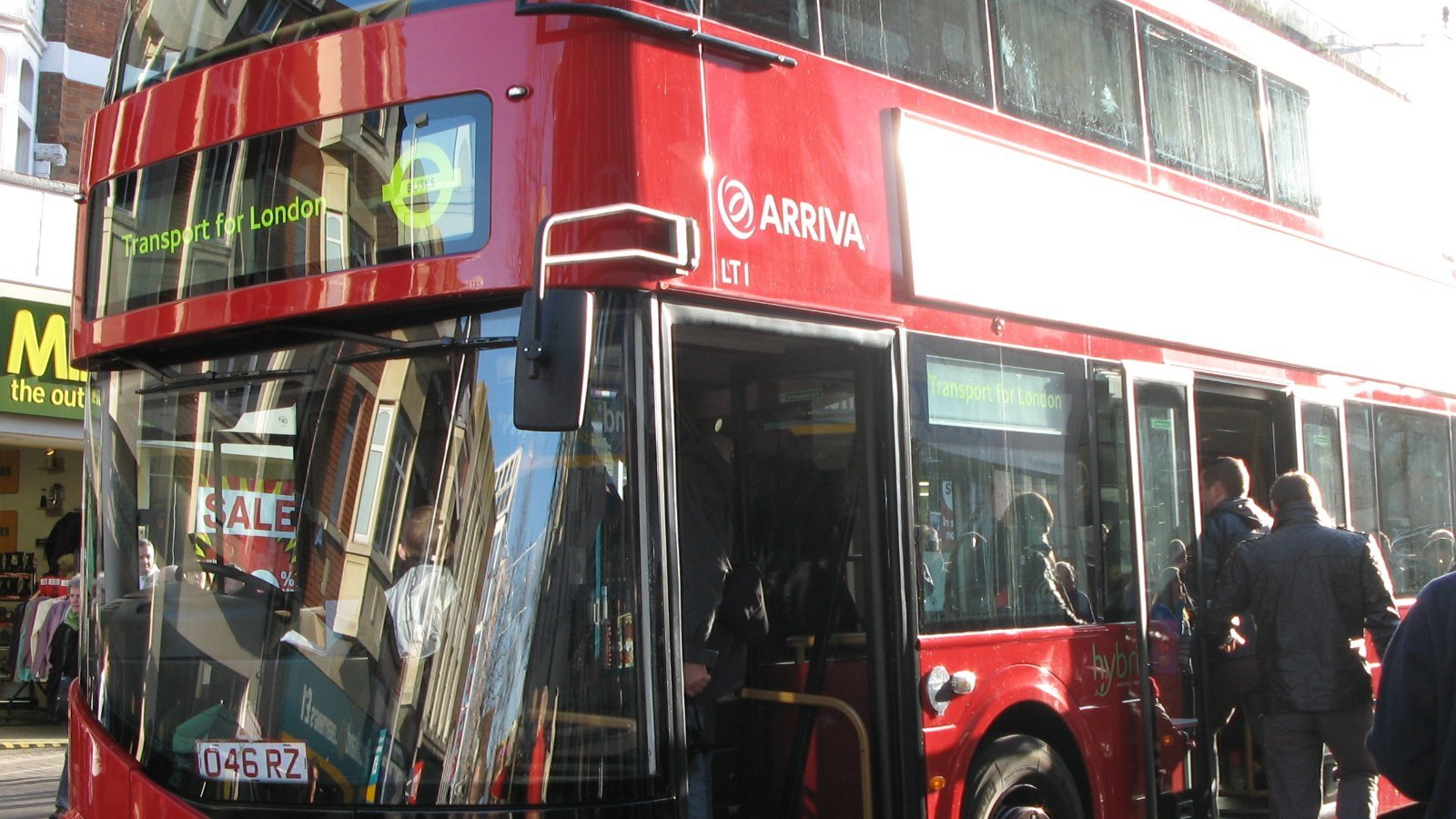
Header photo: Charlotte Gilhooly from London, England , CC BY-SA 2.0, via Wikimedia Commons.
By Matthew Pye · Published 23 October 2026 · Updated 13 November 2026